
Growth is not a one-trick pony.
It’s holistic.
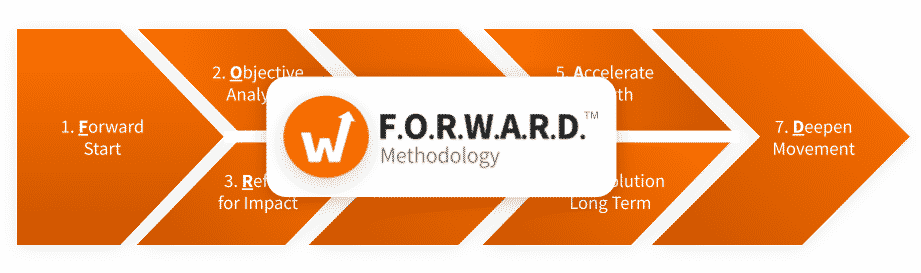
Growth is not just a marketing or management job. It’s a company-wide effort. After helping 150+ businesses grow, I’ve created my own process:
The 7 Phases of F.O.R.W.A.R.D.™ Growth.












Ready to take control over your growth?
Plan a 1-on-1 videocall with me. Together we'll walk through your struggles and how to solve them. If you then still want to know more, we can discuss what a collaboration would look like.
Book a strategy call nowThe F.O.R.W.A.R.D. Methodology™: a proven process to get a company from stagnating growth to a forward-moving company again
Most growth hackers focus on quick hacks and short-term tactics. The F.O.R.W.A.R.D. Methodology is different. It’s a structured, 7-phase process designed to create lasting growth across every part of your organization — not just your marketing department.
Each phase builds on the previous one, ensuring that growth becomes embedded in how your company operates. From creating initial momentum to building a self-sustaining growth culture, the methodology covers the full journey.
And yes… I am aware that my name is inside the methodology, but hey: it’s my methodology, so I’m kinda allowed to put a pun in the name.
A step-by-step explanation of the F.O.R.W.A.R.D.-process
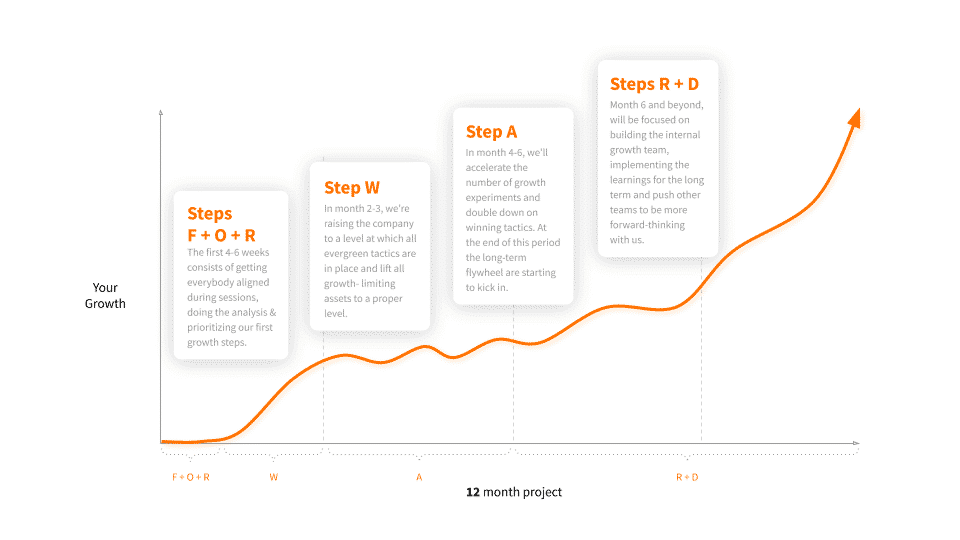
The full process typically takes between 6 and 18 months, depending on the size and complexity of the company. During that time, three things will happen:
- ✓The company will shift from ad-hoc growth efforts to a structured, repeatable process
- ✓Teams will learn to prioritize based on data and impact rather than gut feelings
- ✓Growth will become embedded in the company culture, not dependent on a single person or team
Note: The process differs slightly for startups, scaleups, and corporates. Startups may move through phases faster due to smaller teams and fewer stakeholders, while corporates often need more time in the early phases to align multiple departments. The core principles remain the same.
Step 1
Forward Start
“Create momentum, urgency and cooperation for the long run”
Most growth projects fail not because of bad ideas, but because of bad starts. This first phase is all about setting the right foundation before any experiments begin.
You need a well-thought-through goal and strategy. Before diving into tactics, you need clarity on where the company wants to go and what growth means in your specific context. This is about aligning leadership on a shared vision so everyone is pulling in the same direction.
You need the perfect launching team (3-5 people). Growth is a team sport. You need a small, cross-functional squad that includes skills in marketing, data, tech, and product. This team will be the engine of the first experiments.
You need the right momentum and urgency. Without urgency, growth becomes a side project. The team needs dedicated time, clear deadlines, and visible leadership support to make it a real priority.
Management needs to create a safe space for underperformance. Most experiments fail — that’s by design. Leadership must explicitly communicate that failure is expected and that the goal is learning speed, not a perfect success rate.
Step 2
Objective Analysis
“Understand where, what and why to focus”
This phase replaces opinions with data. Many companies think they know where their biggest problems are, but analysis often reveals a completely different picture.
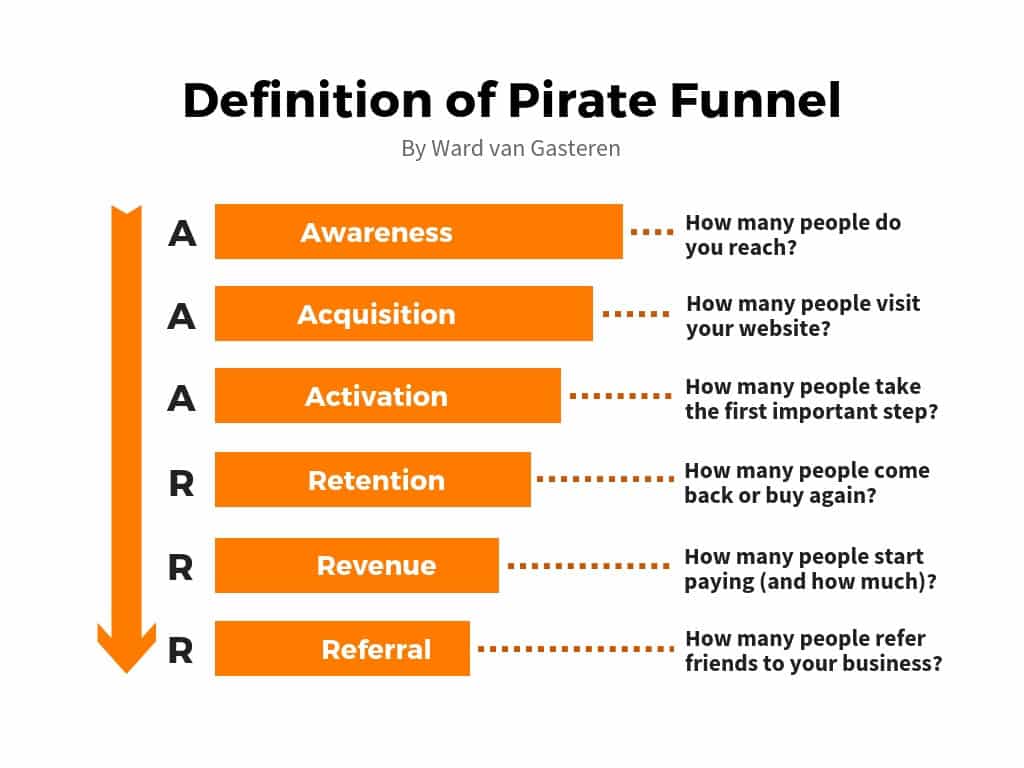
First: know ‘where’ growth is stagnating (Pirate Funnel). Using the AAARRR pirate funnel, you map the entire customer journey to identify where the biggest drop-offs are. This tells you which stage of the funnel to focus on first.
Second: find out ‘what’ is blocking growth (data analysis). Once you know where the problem is, you dig into the data to understand what specific issues are causing the bottleneck. Analytics, heatmaps, session recordings, and funnel analysis all come into play here.
Third: understand ‘why’ it causes a big blocker (customer conversations). Data tells you what is happening but not why. Talking to customers and running surveys helps you understand the underlying motivations, objections, and friction points.
Step 3
Refine for Impact
“Hit hard in the right places”
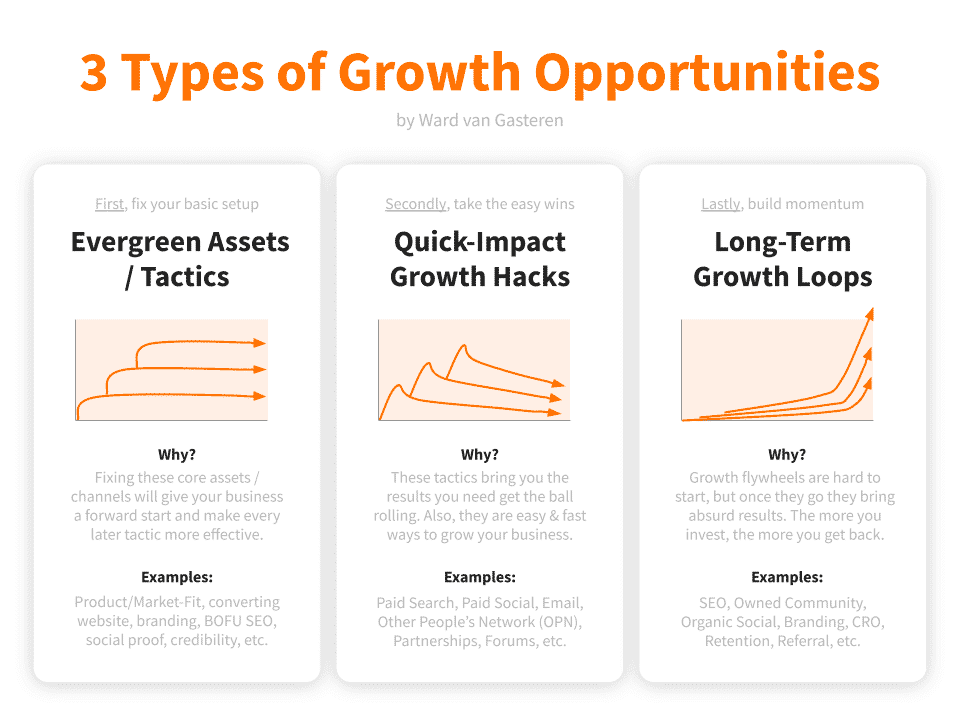
Now you know where the problems are. But you can’t fix everything at once. This phase is about ruthless prioritization to ensure maximum impact with limited resources.
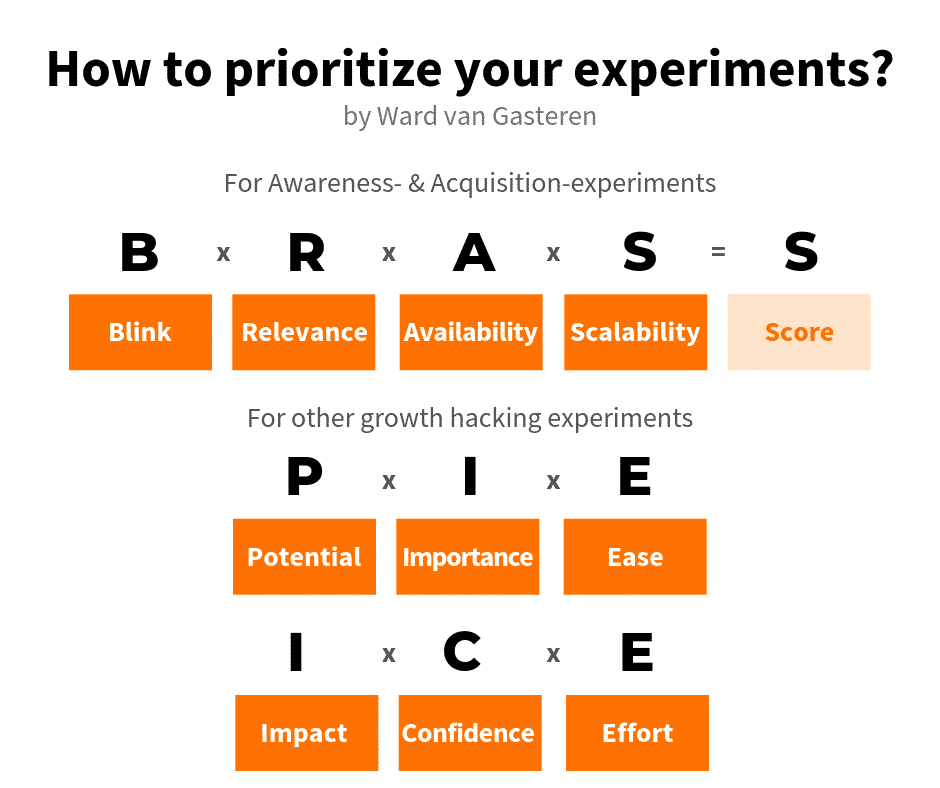
Focus on high potential impact & low effort. Use an impact-effort scoring framework to prioritize your experiment backlog. The goal is to find the experiments that give you the most learning or revenue per hour invested. This keeps the team focused and prevents spreading too thin.
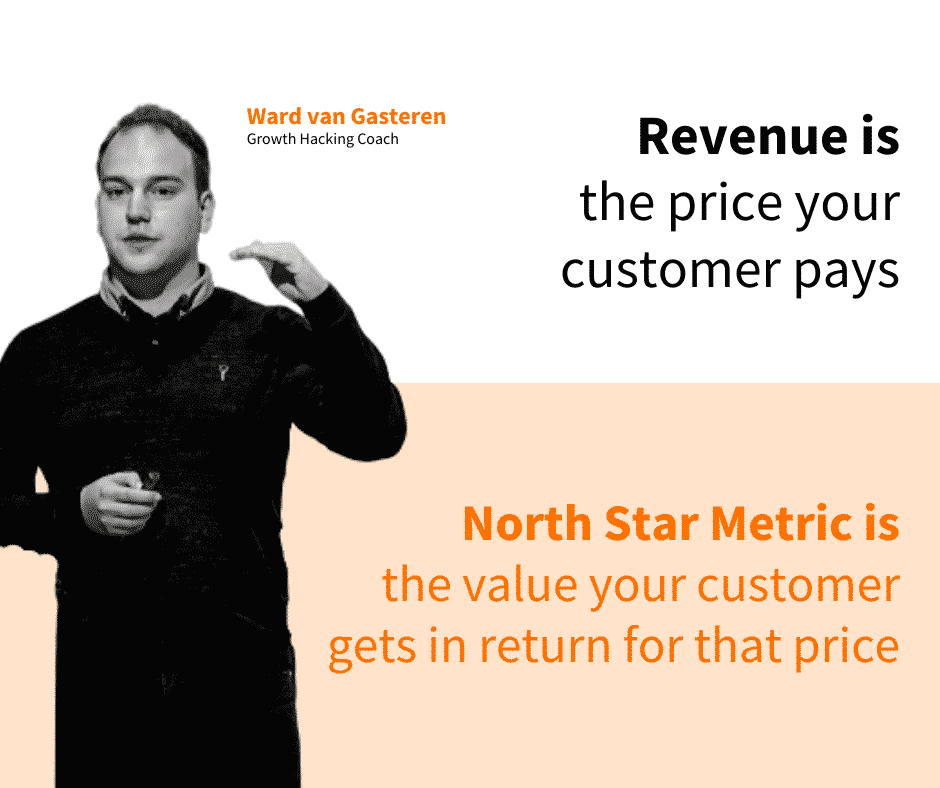
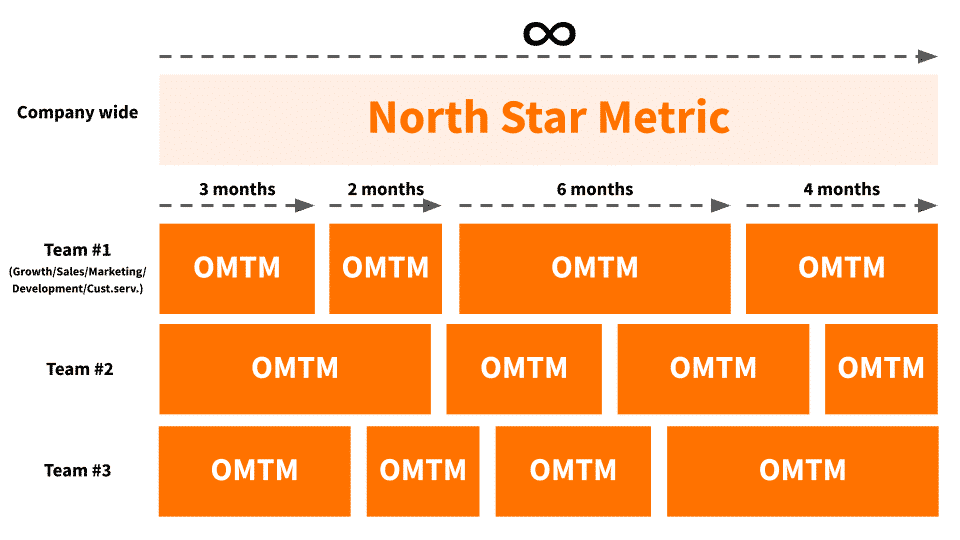
Focus on one metric: your OMTM. The One Metric That Matters keeps the entire team aligned. Instead of chasing ten different KPIs, you rally around a single number that represents the biggest growth lever at this moment.
Step 4
Win for Short Term
“Showing the organization this is a winning strategy”
This is where the rubber meets the road. You need visible results quickly to maintain momentum and build trust with stakeholders.
Quick results via rapid experimentation (success rate 1:3). Run experiments in short sprints of 1-2 weeks. On average, about one in three experiments will produce a positive result. The key is velocity: the more experiments you run, the faster you learn and the more wins you accumulate.
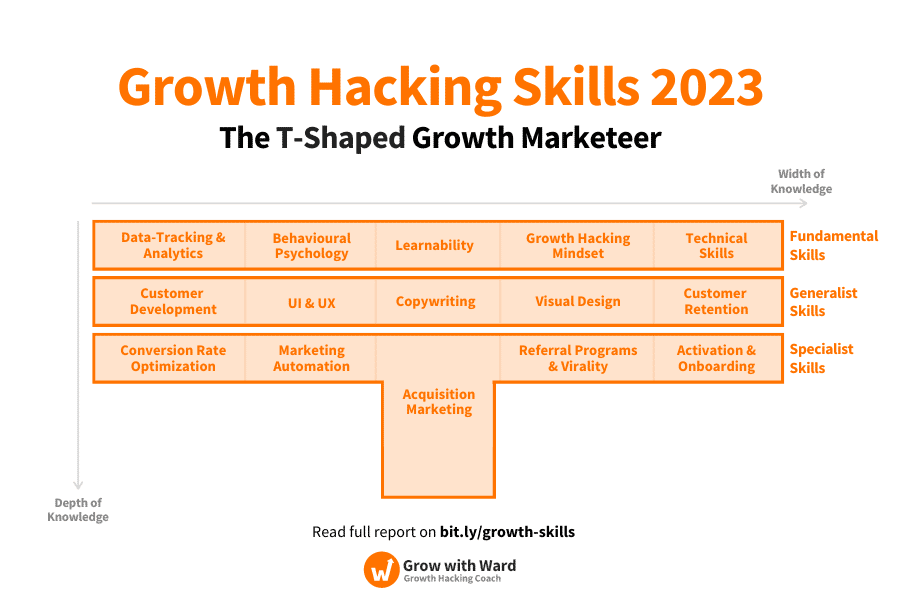
You need an independent T-Shaped team. The growth team needs people who are deep experts in their own domain but can also contribute across disciplines. This T-shaped skill set allows for fast execution without dependencies on other departments.
The 80/20 rule is most important. Focus on the 20% of activities that drive 80% of results. Perfectionism is the enemy of experimentation. An 80% solution shipped today beats a 100% solution shipped next month.
Step 5
Accelerate Growth
“When it gets busy, get even busier!”
By now you have proven wins and a working experiment process. This phase is about scaling what works and increasing the pace of innovation.
Collaborate with other departments. Growth is no longer just the growth team’s job. Start involving product, sales, customer success, and engineering in the experiment process. This multiplies your capacity and ensures growth insights reach the entire organization.
Balance ‘initiating new ideas’ vs ‘rolling out winners’. There is a tension between exploring new experiments and scaling the ones that already work. Allocate time for both: roughly 60% on scaling proven winners and 40% on testing new hypotheses.
You may need to expand the team with specialists. As experiments get more complex and the scope widens, you may need to bring in specialists for areas like paid media, CRO, data engineering, or product design to maintain execution speed.
Step 6
Revolutionize for Long Term
“Kickstart flywheels of other teams”
The goal now shifts from one team driving growth to the entire organization adopting a growth mindset. This is where you build self-reinforcing flywheels.
Identify Coaches, Initiators and Decision Makers. In every department, there are people who naturally gravitate toward experimentation. Identify them and give them the tools, knowledge, and authority to run their own growth initiatives. Coaches teach the process, Initiators run experiments, and Decision Makers allocate resources.
Growth movement across departments. When multiple teams are running experiments simultaneously, the compound effect is enormous. Product teams optimize onboarding, sales teams test new outreach methods, customer success teams reduce churn — all using the same data-driven approach.
Step 7
Deepen Movement
“Sustainable growth from top, middle and bottom”
The final phase is about making growth permanent. This means embedding it at every level of the organization so it survives leadership changes and shifting priorities.
Forward-focused leaders at the top. Leadership must visibly champion the growth culture. They set the tone by asking for experiment results in board meetings, allocating budget to testing, and rewarding learning over playing it safe.
Optimistic new talent at the bottom. When hiring, look for people with a growth mindset: curious, data-literate, and comfortable with experimentation. These new hires reinforce the culture from the bottom up.
Handle toxicity (management responsibility). Not everyone will embrace the new way of working. Some people will actively resist change. Management has a responsibility to address this directly, whether through coaching, role changes, or other interventions. Ignoring toxic resistance can undermine years of progress.

Conclusion
The F.O.R.W.A.R.D. Methodology is not a quick fix. It’s a comprehensive process that transforms how a company thinks about, executes, and sustains growth. Each phase builds on the last, creating compounding results over time.
Whether you are a startup looking to find product-market fit, a scaleup trying to break through a growth plateau, or a corporate wanting to inject an innovation mindset into your teams — the methodology provides a clear path forward.
If you want to learn more about how the F.O.R.W.A.R.D. Methodology can be applied to your specific situation, let’s have a conversation.
“Ward is very good at focusing his story to the listener. In our case, a more institutional context. In a short time he managed to convince the organization of the added value of growth hacking.”


Sylvano Aboikoni
Innovation Lead - MN Insurances
“Ward is a sincere and interested person who has a lot of knowledge and experience of the online shopping street. Ward simply translates complex matter into understandable language.”

Rik Stapelbroek
CEO & Founder - Real Life Gaming
“With his patience and knowledge, Ward has brought us an enormous amount of knowledge on the subject of Growth Hacking, including all data & technical skills. We were able to apply this knowledge directly in practice.”


Merel Kerkhof
Online Marketeer - Studio WHY
“Ward challenged and guided us in our innovation-projects. I have mastered many of his skills through his clear explanation with sharp analyzes. Here I am still reaping the benefits!”


Thomas van der Vliet
Innovation Manager - Riksja Travel